14 November is World Diabetes Day
Diabetes programme
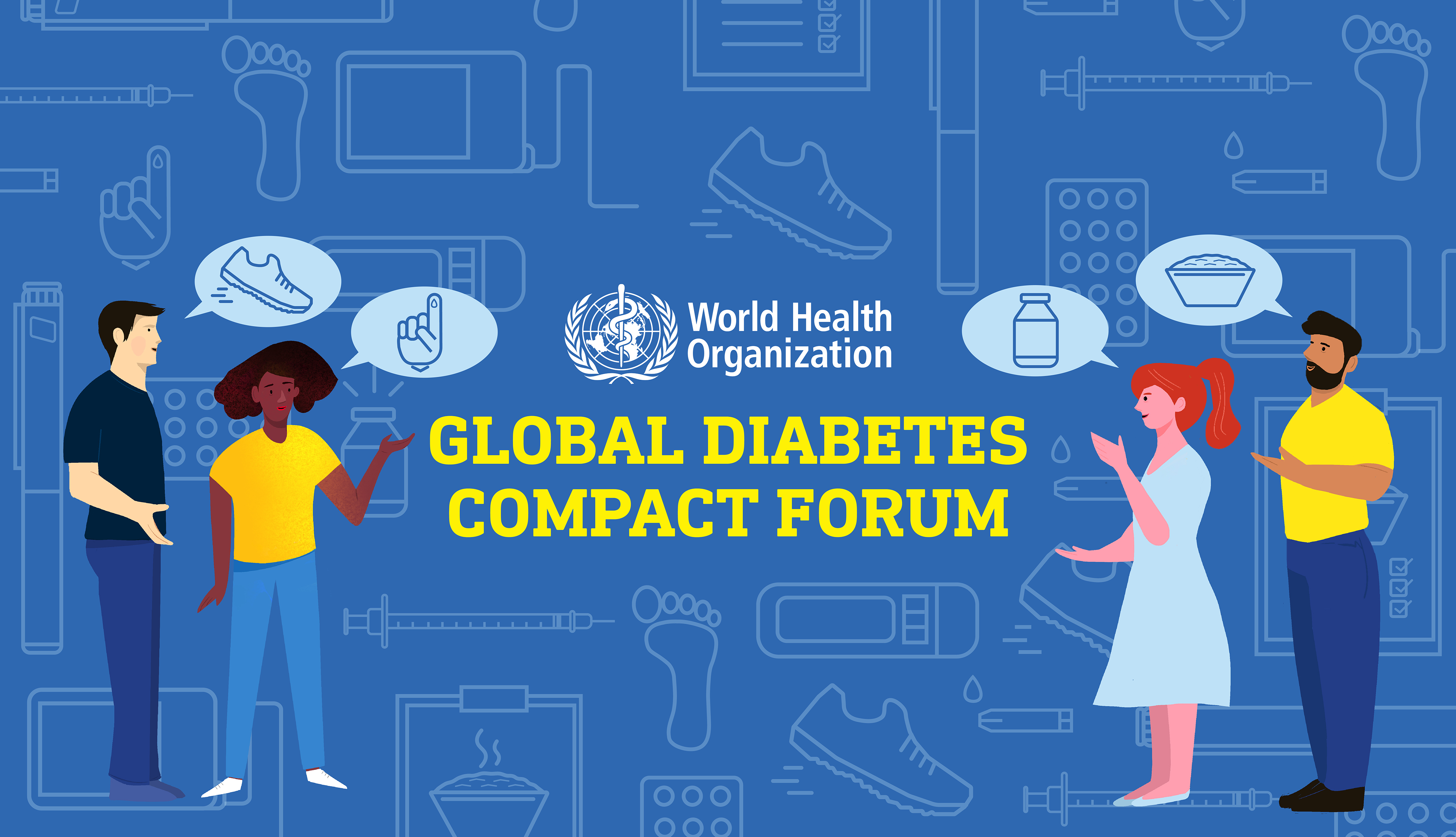
The Diabetes programme, named The WHO Global Diabetes Compact, has the vision of reducing the risk of diabetes, and ensuring that all people who are diagnosed with diabetes have access to equitable, comprehensive, affordable and quality treatment and care.
There are 5 global coverage targets for diabetes to be achieved by 2030:
The Global Diabetes Compact works through 6 workstreams to advance the diabetes agenda and accelerate progress towards the global coverage targets:
14 November is World Diabetes Day

Breaking barriers, bridging gaps
WHO Technical Advisory Group of Experts on Diabetes
Engagement of people living with diabetes
In 2021, WHO launched the Global Diabetes Compact (GDC), an initiative to reduce the risk of diabetes and ensure that all people who are diagnosed with...
The Guidance on global monitoring for diabetes prevention and control by WHO provides a comprehensive framework to support countries in tracking and managing...
This document is the seventh in a series of Tobacco Knowledge Summaries. This document is prepared with the objective to summarize the current evidence...
The Technical report of the fourth meeting of the WHO Strategic Advisory Group of Experts on In Vitro Diagnostics, 2022 (including the fourth WHO model...
At the 75th World Health Assembly in 2022, Member States adopted new recommendations for the prevention and management of obesity and endorsed the...
The Assessment package has been developed for countries to evaluate the implementation of the WHO Standards for prosthetics and orthotics. It enables identification...
This brief summarises the recommendations on physical activity and sedentary behaviour for people living with type 2 diabetes. It will support and guide...
Improving diabetes outcomes for all, a hundred years on from the discovery of insulin: report of the Global Diabetes Summit The Global Diabetes Summit,...
The year 2021 marks 100 years since the momentous discovery of insulin in 1921, which marked a turning point in care for those with diabetes. Over the...
This executive summary reports the recommendations made by the Expert Committee for the 2021 update of the WHO Model List of Essential Medicines...
This publication was developed in response to the need for a reference list of priority medical devices required for management of noncommunicable diseases...
Noncommunicable diseases (NCDs), also known as chronic diseases, tend to be of long duration and are the result of a combination of genetic, physiological,...
This new HEARTS – D module on Diagnosis and management of type 2 diabetes complements and expands the diabetes section of the HEARTS Technical Package...
Diabetes is a chronic, progressive disease characterized by elevated blood glucose levels. Diabetes can lead to complications such as cardiovascular...
High blood pressure kills more people than any other condition – approximately 10 million people each year, more than all infectious diseases combined....