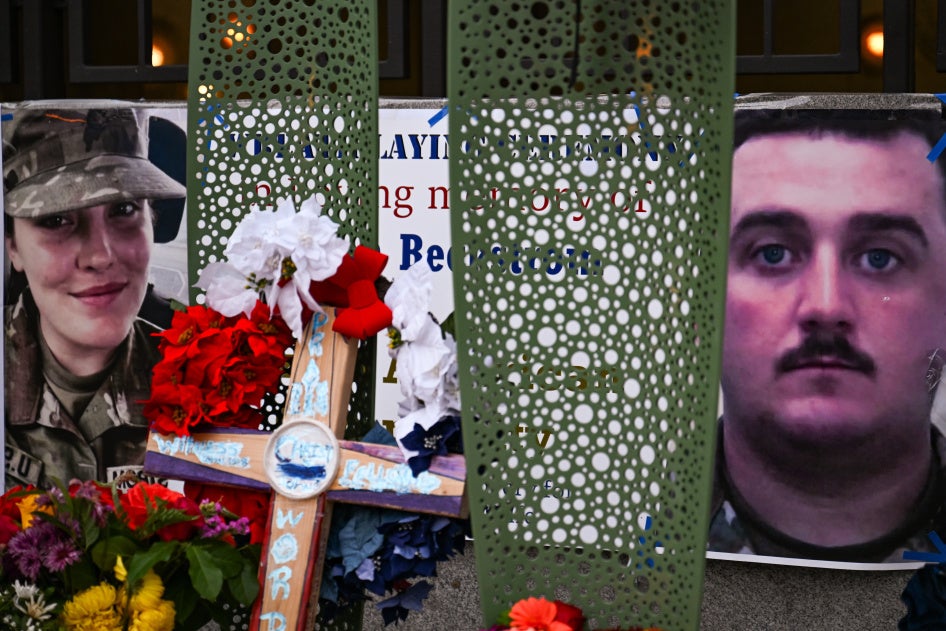
Public outrage over the tragic Nov. 26 shooting of two National Guard officers in Washington has focused on whether U.S. officials properly vetted the alleged shooter, Rahmanullah Lakanwal, after the Taliban takeover of Afghanistan.
They apparently did, but what is less evident is whether Lakanwal’s training and recruitment by the CIA, or his unit’s role in the Afghanistan conflict, had any bearing on the decision to admit him. The legacy of CIA abuses in Afghanistan has already had lasting harm and could have more. As the recent shootings make clear, the U.S. government must address them.
Lakanwal was a member of a Zero Unit, an Afghan strike force trained and overseen by the CIA as part of its clandestine counterterrorism mission that ran parallel to U.S. military operations, but with looser rules of engagement.
Former Afghan government officials, civil society activists, health care workers, journalists and community elders have described the actions of these Zero Units as devastating for Afghan communities. Some have used the term “death squad.” Their operations expanded widely from 2017 as part of the first Trump administration’s policy to boost CIA operations to target the Taliban.
In my research for Human Rights Watch into these Zero Units, I found that these forces often targeted civilians because of mistaken identity, poor intelligence or local political rivalries. They sometimes targeted medical staff for treating wounded insurgents, families because they had provided food to the Taliban, including under duress, or were simply in the vicinity when insurgents carried out attacks.
I repeatedly came across cases in which U.S. intelligence officials had relied on sources who claimed targets were “Taliban,” when the killings were actually part of a local vendetta and had been used to settle old scores.
In October 2018, a Zero Unit subunit raided a home in Nangarhar province, shooting dead five civilian members of one family, including a child. In December 2018, members of another Zero Unit killed six civilians during a night search operation in Paktia province, deliberately shooting an older man in the eye, and his nephew, a student, in the mouth.
In April 2019, another subunit killed the principal of the local school in his home, shooting him three times and then dragging his body outside. In July 2019, a subunit in Wardak raided a medical clinic, summarily executing two medical workers, two patients, and a visitor.
Why were such abuses permitted to occur? There has been far too little attention to what U.S. special forces and their Afghan counterparts did and the subsequent failure to investigate complaints and hold those responsible to account.
These units had U.S. Special Forces personnel — primarily Army Rangers — deployed alongside them and relied on U.S. logistical support during operations. However, they fell outside ordinary chains of command within the U.S. and Afghan military. Moreover, the U.S. military carried out few investigations into reported abuses by Special Forces, instead choosing to ignore or largely tolerate actions that could conceivably amount to war crimes.
Taliban forces frequently committed war crimes and human rights abuses, including attacks that deliberately killed and injured civilians. However, Zero Unit attacks that resulted in civilian deaths and the terror they caused, particularly in rural areas, provided fertile ground for Taliban recruitment and alienated local communities caught between U.S.-backed forces and the Taliban.
During his first term, President Trump issued pardons to several special forces officers accused or convicted of committing murders of civilians and captives in Afghanistan and Iraq. Ducking any responsibility for possible war crimes by U.S. and partnering Afghan forces, the Trump administration has instead scapegoated Afghan refugees for the Washington shootings. A White House spokesperson said they “should not be here” — but they are the same refugees who had to flee Afghanistan precisely because they had worked for U.S. forces or programs the U.S. had supported.
Other Western countries that had troops in Afghanistan are slowly beginning to reckon with their own often-brutal legacies.
After Australian special forces complained about actions by their commanding officers, the government opened an inquiry into numerous allegations of unlawful killings of Afghan civilians by Australian special forces troops that found credible evidence of war crimes. An office was set up to investigate the incidents, though progress has been minimal and slow. An ongoing years-long inquiry into similar allegations against British special forces has uncovered evidence of summary executions and other abuses against Afghan civilians.
Public outrage shouldn’t be directed at the refugees who fled Taliban-controlled Afghanistan after the war. Pointing of fingers at Afghan refugees is misplaced. Confronting U.S. decisions that empowered abusive forces like the Zero Units is harder, but that is where the honest reckoning needs to begin.