Diplomats from dozens of countries gathered in Nairobi, Kenya, in November for a new round of negotiations on a United Nations treaty for international tax cooperation. The scene itself is important: representatives from across the globe meeting in an African capital, under the UN’s auspices, to shape economic rules that would govern a key aspect of the global economy. Unlike when many aspects of the current regime were hammered out, this time, all countries have an equal seat at the table.
Much of the international tax system was designed more than a century ago, for a world dominated by colonial powers and where today’s globalized and digitized economies were unimaginable. Since its founding in 1960, the Organization of Economic Cooperation and Development (OECD), a club of wealthy nations, has taken on the role as the dominant forum for global tax negotiating.
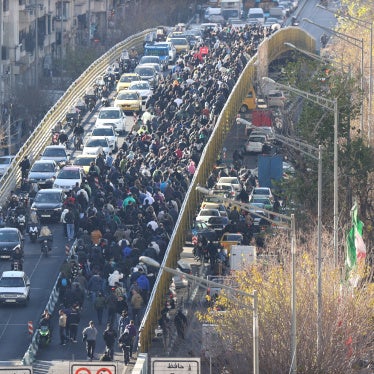
Around the world, economic inequality is fueling both the rise of authoritarianism and protesters going to the streets to demand change. Tax policy is inextricably bound up with those issues. Indeed, it was Kenyans who sparked the wave of “Gen-Z” protests in 2024, protesting a tax bill that would have filled budget gaps by, for example, taxing menstrual products and mobile money transfers used by informal workers.
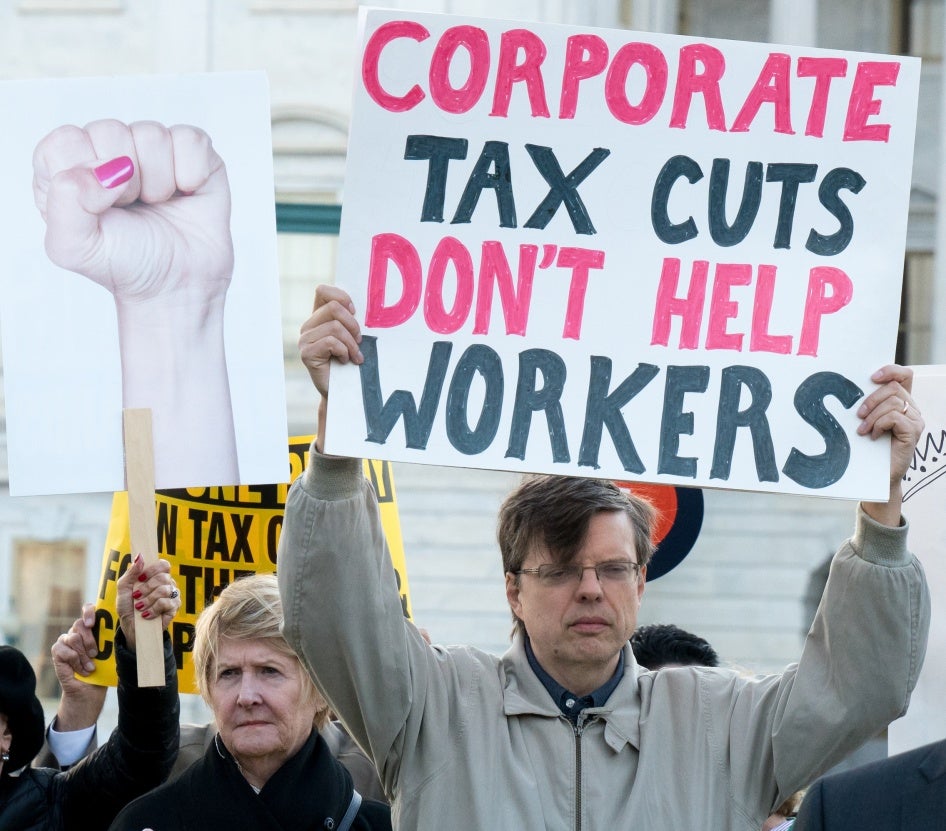
Rules for cross-border taxation set out in the 1920s and fine-tuned by the OECD form the basis of thousands of bilateral tax agreements between countries. Companies and individuals exploit their loopholes with ease, often contributing little or nothing in taxes even as they amass fortunes larger than many governments’ budgets.
For example, tax rules that treat a company’s subsidiaries as separate entities make it easy to game the system. By manipulating the prices of transactions between them — a practice known as transfer pricing — corporations can shift profits to tax havens, effectively allowing them to choose where they pay taxes regardless of where revenues are made or their headquarters are located. This fuels a “race to the bottom,” where some governments lower tax rates or offer incentives in a bid to entice companies to book profits in their jurisdictions.
At the same time, international rules have long tilted toward countries where corporations are residents, or where wealthy individuals live, privileging wealthier countries over those where their profits are generated. The rise of the digital economy has made this imbalance even starker, allowing companies to make billions in countries through online services without contributing to their public revenues. Cloaked in secrecy, a maze of subsidiaries and offshore accounts keeps governments from untangling who owes what, and where.
Ultra-wealthy individuals also exploit this opaque system to park assets in shell companies and tax havens, helping to drive an extraordinary rise in largely untaxed personal wealth. According to Oxfam, global private wealth has increased eight times more than public wealth since 1995, with the majority of gains accruing to the top 1 percent. In the past decade alone, the top 3,000 billionaires added $6.5 trillion to their wealth—an amount equivalent to 14.5 percent of global GDP and enough, Oxfam estimates, to end poverty 22 times over. Yet, globally, billionaires pay a tax rate equivalent to less than 0.5 percent of their wealth.
The consequences are staggering. Governments worldwide lose hundreds of billions of dollars in revenue each year, before accounting for how the system itself discourages reforms that could unlock vastly larger sums. The United States is one of the largest losers, losing out on an estimated $177 billion in potential revenue annually, or about $542 per American, to tax havens, according to the Tax Justice Network.
While most governments lose out, the effects are felt hardest by governments in the Global South, which are most disadvantaged under current tax rules and whose budgets are also strained by other factors, such as high debt servicing costs. Indeed, as the tax scholar Steven Dean has pointed out, the OECD, which has held a tight grip on global tax policy and still does not include any African countries, was founded the same year known as “the Year of Africa” because 17 African states achieved independence.
These losses are not just fiscal—they undermine human rights. Sri Lanka, for example, has watched some of its most impressive and hard-won gains undone by poor tax policies created to be responsive to the larger international system.
After independence in 1948, Sri Lanka’s tax revenues made up about 20 to 25 percent of GDP, financing ambitious investments in education and health. By the 1970s, its literacy rates rivaled those of much wealthier nations. But as the country began re-orienting its economy to aggressively attract foreign investment, its tax system was unable to properly reap the benefits of its growth, so revenues—and social spending—never kept pace.
By 2022, tax revenues had plummeted to just 7.3 percent of GDP—among the lowest rates in the world. This contributed to triggering a debt default and an economic crisis the same year that devastated millions of families. That year, its education spending was the third lowest in the world as a share of GDP. Our research documented that its once-celebrated public school system now struggles to provide basics like exam paper. Principals routinely ask parents to pay “school development fees” just to keep the lights on.
Sri Lanka’s story is not unique. It reflects a global system that makes it extraordinarily difficult for governments to raise revenue fairly, and disincentivizes them from trying.
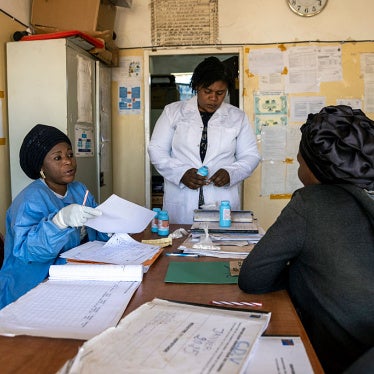
This leaves governments with beleaguered public budgets and forces them to rely heavily on taxes on goods and services, such as value added taxes, that generally hit the poor hardest. A UN tax treaty could begin to change all that. International human rights law requires governments to take steps to the “maximum of their available resources” to fulfill economic, social, and cultural rights—like education, health care, and social security—both individually and through international cooperation. A global effort to design fair international tax rules would help enable all governments to fulfil their human rights obligations.
Negotiations on the substance of the treaty are still in the early stages and only piecemeal draft language has been published. The US has pulled out of the negotiations, but dozens of other countries, including major European economies and China, are actively participating. Governments are expected to vote on a framework convention and two protocols – one on cross-border services and another on dispute prevention and resolution – during the UN General Assembly in 2027.
While the final shape of the treaty is yet to emerge, the contours of the potential to build a more effective and just system are already discernable. For example, one draft article would grant governments taxing rights wherever a company conducts “business activities,” including where “value is created, markets are located, and revenues are generated.” This would end the current system’s privileging of taxing rights of governments where companies are incorporate or headquartered (so-called “residence countries”), including by limiting the taxing rights of countries where the economic activity takes place (“source countries”) to profits tied to a company’s “physical establishment.”
The current draft does not yet tackle the problem of transfer pricing, which can let profits easily escape tax collectors’ even where they have the rights to tax. The Independent Commission for the Reform of International Corporate Taxation (ICRICT), a group of economist co-lead by Nobel laureate Joseph Stiglitz, as well as dozens of civil society organizations, have urged negotiators to adopt rules that treat companies and their subsidiaries as a single entity.
Draft articles also lay out measures for governments to work together to improve implementation, combat harmful tax practices, and stem illicit financial flows. While key gaps and questions are still being worked out, there is clear potential for a well-coordinated and transparent system.
The chance for governments to work out a fairer tax system would not end with adopting a treaty, since, like the climate treaty, it will create a “conference of parties” governments could use to coordinate tax policies, avoiding the negative spiral of competition that makes all governments lose out. The stakes go beyond economic justice. Equitable taxation can be a critical for helping governments raise revenues to meet the urgent challenge of transitioning to a low-carbon economy – an issue governments discussed during the annual UN climate conference, which took place in parallel to the UN tax treaty negotiations.
As negotiators prepare to convene again in New York in February, they have an opportunity to take a huge step forward towards a world where every country has the means to uphold the rights of its people.