New reporting that US forces used an aircraft painted to appear civilian for a lethal strike on a boat in the Caribbean Sea on September 2, 2025—killing 11 people—raises new questions about the erosion of internal safeguards on US military operations.
According to The New York Times, officials briefed on the strike said the aircraft had no visible military markings and carried its weapons concealed inside its fuselage. Officials interviewed by the Times said they were told the plane flew low enough for the people on the boat to see it before the attack.
The strike began a broader campaign attacks on boats in the Caribbean and Pacific that now number 35, with at least 123 people killed. Key details about the incident remain classified.
The Trump administration claims this and other boat strikes were part of an armed conflict with criminal groups, a legal position widely derided by experts. Human Rights Watch considers these attacks to be extrajudicial executions under international human rights law.
But if even under the administration’s indefensible war paradigm, the use of an aircraft disguised as civilian to carry out a strike would expose another institutional failure. In war, international humanitarian law prohibits “perfidy,” which is the feigning of civilian or other protected status to lull an adversary into lowering their guard and then attacking them. This prohibition has long been adopted in US military doctrine, including the US Defense Department’s Law of War Manual, naval operation handbooks, and the rules governing military commissions, which treat perfidy as a punishable offense.
US military lawyers are trained to stop violations of the law. When combined with the follow-up strike on survivors of the initial attack—also prohibited under the legal regime the administration claims to be applying—the new allegations add to the impression already created by the larger campaign of unlawful boat strikes that there has been a real breakdown in command safeguards to prevent unlawful attacks.
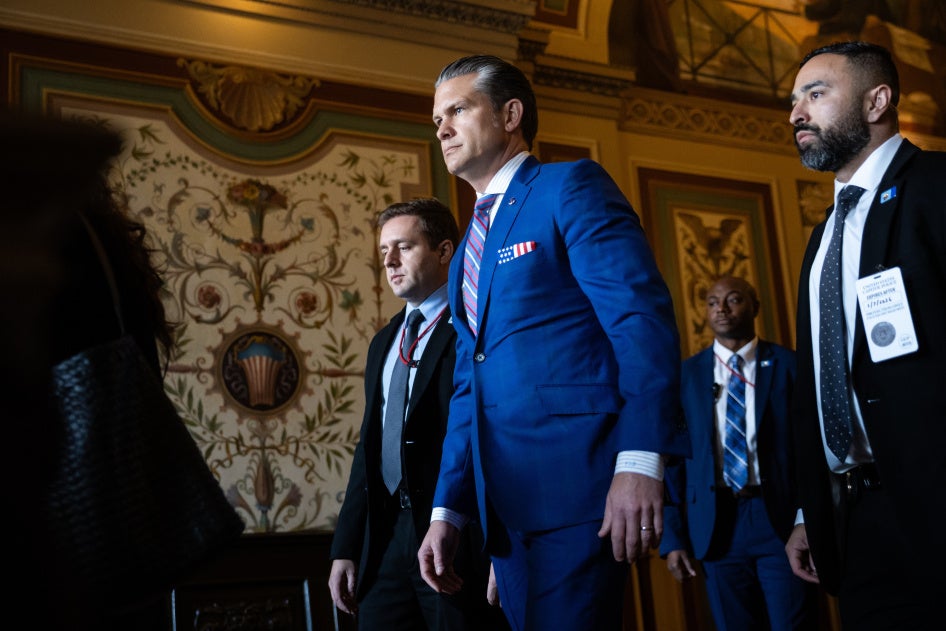
Since taking office in January 2025, the Trump administration has removed and demoted senior military lawyers, and loosened guidance for compliance with international humanitarian and human rights law. Public reporting suggests that legal concerns raised by a senior Judge Advocate General and other military lawyers were sidelined during the boat-strike campaign, raising questions about whether normal legal review processes were meaningfully applied.
The September 2 strike is not just about a single aircraft or operation but rather a pattern of lawlessness that is possibly being made worse by the dismantling of legal safeguards. There is a pressing need for Congress to investigate how these operations were authorized, what legal review occurred, and whether internal checks on the use of lethal force are functioning at all.