
UK lawmakers are set to vote on January 14 on a proposed amendment to the Public Order Act 2023 (POA) that would classify “life sciences” facilities as “key national infrastructure.” If adopted, the change, which is drafted in vague and broad language, would expose people who organize or participate in protests near a wide range of sites to criminal penalties of up to 12 months in prison.
This includes pharmaceutical and healthcare facilities, including those used for animal testing, meaning the amendment could affect protests about animal testing, access to medicines, corporate accountability, or the harmful effects of specific drugs.
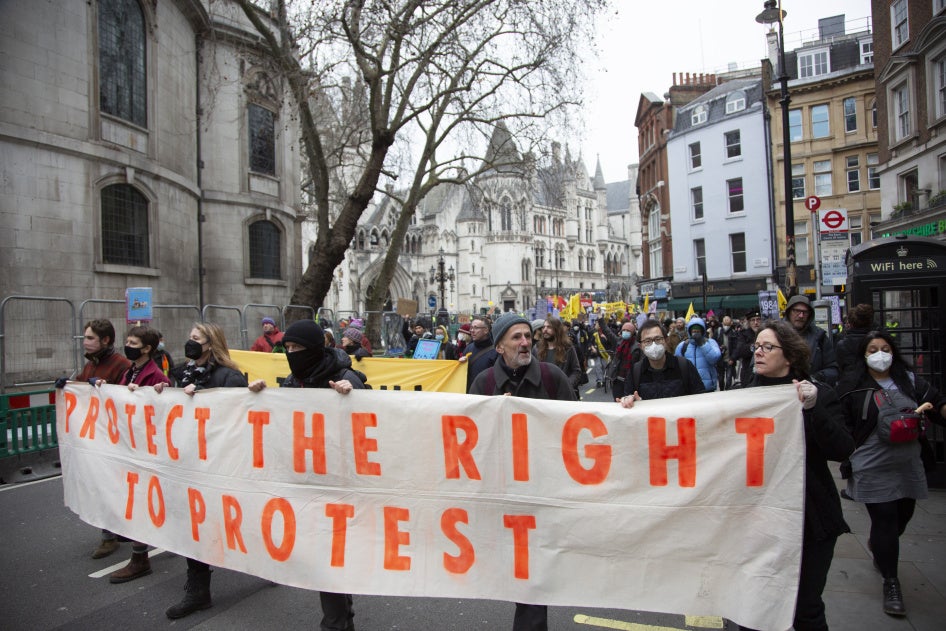
The proposal is the latest in a series of measures that have steadily narrowed space for peaceful protest in the UK. As documented in Human Rights Watch’s recent report, “Silencing the Streets: The Right to Protest Under Attack in the UK,” a raft of laws introduced since 2022 have given police wide discretion to restrict assemblies deemed noisy, disruptive, or inconvenient, reclassifying long-established protest tactics as criminal offenses and imprisonment for nonviolent conduct. The proscription of Palestine Action as a terrorist group has been followed by a surge in the use of terrorism laws against peaceful protesters, with thousands arrested and facing terrorism charges.
The amendment’s vague language referring to protests that “interfere with the use or operation” of designated sites is open to broad interpretation. In practice, it may result in restricting protests simply because employees feel uncomfortable entering workplaces or because protests may be deemed inconvenient. Even small, peaceful gatherings, such as people holding signs outside offices, might be criminalized.
Under the European Convention on Human Rights and the International Covenant on Civil and Political Rights, the UK is legally obliged to protect freedom of expression and peaceful assembly. Any restriction must be lawful, necessary, and proportionate, pursuing a legitimate aim. Economic inconvenience or discomfort to businesses alone does not justify sweeping bans on protest. The European Court of Human Rights has repeatedly affirmed that peaceful assemblies are allowed to cause a degree of disruption.
Were this amendment to become law, it could further limit where and how people can express dissent on matters of public interest, including healthcare, corporate conduct, scientific ethics, and animal welfare.
Parliament should vote down this amendment. A democracy committed to the rule of law must protect the right to protest.