Truck drivers in Niger now face a stark choice: risk your life or lose your livelihood.
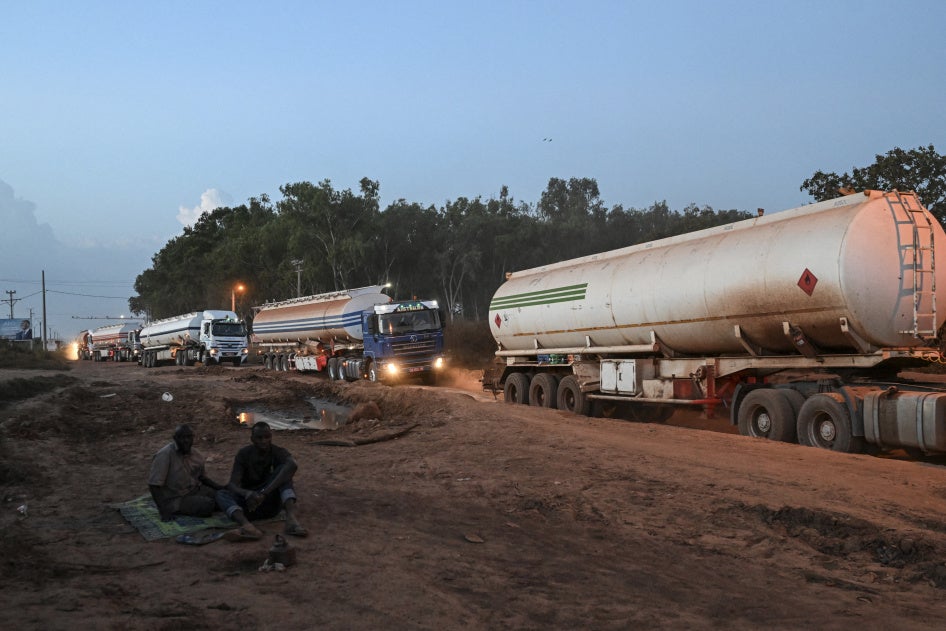
On January 6, Niger’s transport minister issued a decree punishing at least 34 fuel transport operators and long-haul truck drivers who refused to deliver fuel to neighboring Mali. Since September 2025, an Al Qaeda-linked armed group, known as Jama'a Nusrat ul-Islam wa al-Muslimin (JNIM), has laid siege to Mali’s capital, Bamako, and cut off fuel supplies. Sanctions include revoking both the fuel transport rights of several operators as well as the drivers’ licenses. The minister cited “serious violation of legal and regulatory obligations” as reasons behind the decree.
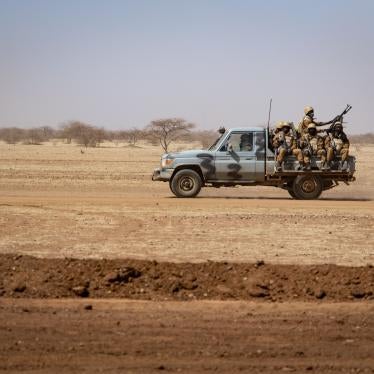
The dangers facing drivers on the Niger-Mali corridor and in central Sahel are well documented. JNIM has repeatedly carried out targeted attacks on commercial transport, kidnapping and killing drivers. Between September and December 2025, JNIM has attacked several convoys carrying fuel supplies to Mali from neighboring Côte d'Ivoire and Senegal.
Niger, Mali, and Burkina Faso are members of the Alliance of Sahel States, a mutual defense pact formed by the three military juntas in 2023 in response to escalating violence by Islamist armed groups. It’s within this framework that in November 2025, Niger delivered 82 fuel tankers under military escort to Mali, helping to stabilize fuel availability in the country. The Nigerien authorities are now using the security pact to justify the punitive conditions on transport operators.
The measures raise concerns about violations of international human rights law, including the rights to work and protection from coercion. Nigerien authorities have chosen license revocations over risk mitigation or protective measures, effectively pressuring people to undertake highly dangerous work in violation of their right to freely choose one’s employment.
Protection from being coerced into work is also well established in the 1930 Forced Labour Convention.
Given the armed conflict in Mali, putting pressure on civilians to transport goods used for military purposes into a combat zone could violate Common Article 3 to the 1949 Geneva Conventions, which prohibits compelling participation in hostilities.
Sanctions imposed without sound risk assessments, due process, or effective remedies raise concerns of arbitrariness. When transport operators are left with the choice between losing their livelihoods or risking their lives, the state is failing to meet its obligation to protect them.
Niger’s authorities should lift the sanctions and ensure that any fuel deliveries rely on voluntary participation and are supported by adequate protections.