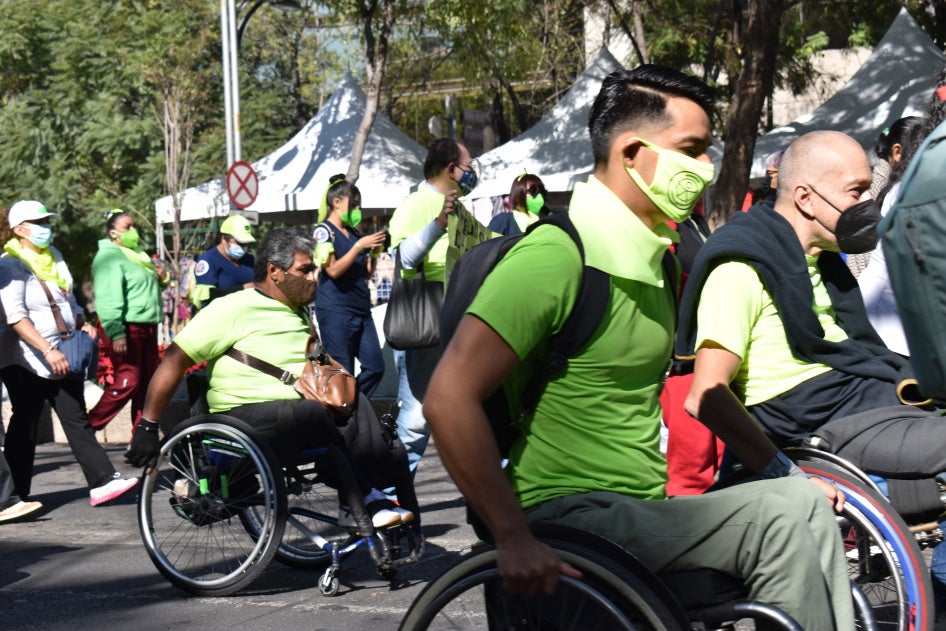
(Mexico City) – The Mexico City Congress should seriously consider a proposal submitted by a coalition led by people with disabilities during its new session, Human Rights Watch said today. That proposal urges lawmakers to adopt a rights-based framework grounded in autonomy, participation, and independent living for care and support legislation.
The Coalition, Cuidados Sí; Apoyos También (Care Yes; Supports Too), is made up largely of people with disabilities. It includes organizations such as Mexicanas con Discapacidad, Women Enabled International, Movimiento de Personas con Discapacidad as well as human rights organizations including Yo También, Human Rights Watch, and Documenta. The coalition has submitted a proposal calling on legislators to include a dedicated chapter on support for independent living in the care and support bills currently under review by the Congress of Mexico City.
“Care and support policies developed without the meaningful participation of the people who will rely on them risk reinforcing the very dependence and exclusion they are meant to address,” said Carlos Ríos Espinosa, associate disability rights director at Human Rights Watch. “People with disabilities are not passive recipients of care and support. They are rights holders, with expertise grounded in lived experience, and their proposals deserve serious consideration.”
The coalition submitted its proposal as the Mexico City Congress moves from pre-consultations toward drafting formal care and support legislation. Members urged lawmakers to seize the opportunity to build a care and support system that expands choice, autonomy, and inclusion, in line with Advisory Opinion 31/2025 of the Inter-American Court of Human Rights and the Tlatelolco Commitment, a regional agreement.
The proposal seeks to shift the focus of Mexico City’s care and support system away from narrow, charity-based approaches and toward a comprehensive, rights-based framework aligned with international human rights law, Human Rights Watch said. It outlines a broad range of support that people with disabilities may require to exercise their rights on an equal basis with others. These include support to access information, exercise legal capacity, prevent and report violence, ensure personal mobility, participate in education and employment, and engage fully in community and public life.
The proposal also emphasizes the central role of personal assistance and community-based services, such as centers for independent living, to prevent institutionalization and forced dependence on families.
Diana Velarde, executive director of Mexicanas con Discapacidad and a member of the coalition, said the proposal reflects what people with disabilities have long demanded in their daily lives. “For many of us, support is not an abstract legal concept—it is what makes it possible to leave our homes, participate in our communities, and live with dignity,” Velarde said. “This proposal puts into law what international standards already recognize: that care and support are rights, and that states have an obligation to ensure they are available, accessible, and centered on people’s autonomy.”
Coalition members also emphasized the often invisible costs of relying on unpaid family care and support. Sara Villanueva, a member of the coalition who requires intensive support, said the absence of adequate public systems places an unsustainable responsibility on families, particularly as the parents of people with disabilities grow older.
“In many cases, the support that allows us to live day to day is provided by our families, without pay, without rest, and without alternatives,” Villanueva said. “My parents—both in their 80s—continue to provide essential support so that I can live my life. This is not a solution that can last forever.”
Villanueva emphasized that the proposal is especially significant because it reflects the realities of people with disabilities themselves. “This coalition is made up almost entirely of people with disabilities, most of us women,” she said. “Our proposal responds to real needs and real barriers, not assumptions about our lives.”
“Aligning care and support policies with international human rights standards is both possible and effective to ensure rights for care and support providers and people with disabilities,” Ríos Espinosa said. “Mexico City has an opportunity to ensure that its legislative proposals on care and support are consistent with these standards and recognize supports for independent living as a core component of equality and dignity for people with disabilities.”