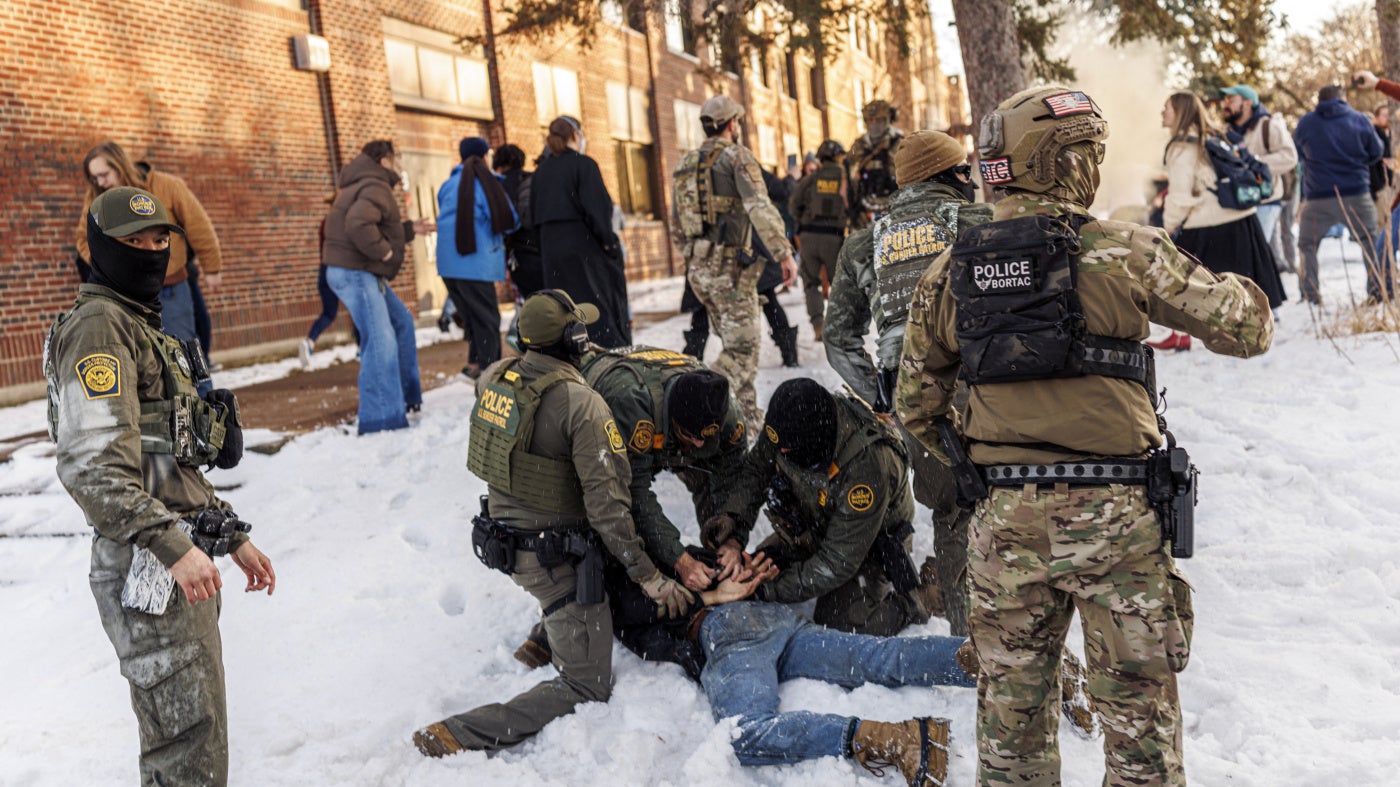
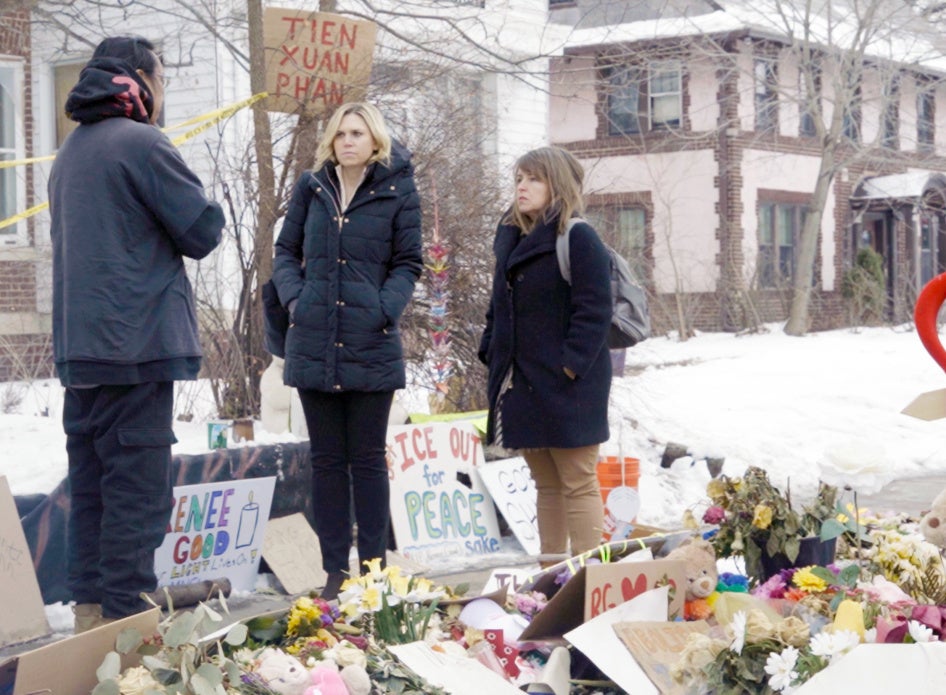
Since late 2025, armed federal agents have descended on the Twin Cities of Minneapolis and St. Paul and elsewhere in Minnesota in the thousands, unleashing a campaign of terror and intimidation against immigrants and those out on the streets to observe or protest their actions—like Renee Good and Alex Pretti, both unlawfully shot dead by armed federal agents.
In the Q&A below, the team describes some of their initial findings and policy recommendations for members of Congress and state and local officials.
What were your initial findings when you arrived in Minneapolis?
What became clear soon after we arrived is that the terror and resulting trauma of Operation Metro Surge are affecting every aspect of daily life, with potentially long-lasting consequences. Many people are afraid to leave their homes. Some are missing doctor’s appointments and not seeking necessary medical care. To keep themselves or their families safe from Immigration and Customs Enforcement (ICE), children are staying home from school and living with the constant fear that their parents could be taken away from them at any moment. Other people are struggling to buy food and pay rent and other bills, as they no longer feel safe going to work.
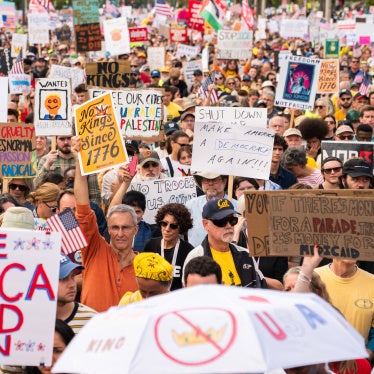
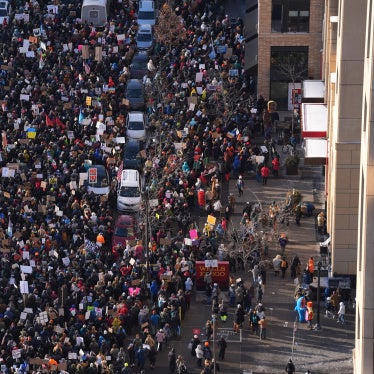
But it was also deeply inspiring to witness how the people of Minnesota are organizing and mobilizing on a massive scale to document government abuses, support those in need, and send a powerful message to the Trump administration that they will not sit silently while their neighbors’ rights are trampled and eroded. Their efforts have forced Congress to grapple with how badly they are failing to hold immigration enforcement agencies to account.
Whom did you meet with, and where did you visit?
We interviewed over 100 people, including some who were detained and many who were otherwise harassed or abused by armed federal agents, among them US citizens.
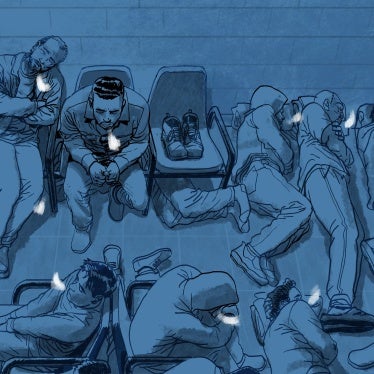
While we did not get access to the Bishop Henry Whipple Federal Building, where ICE detains both US citizens and noncitizens, we saw protesters stationed outside, 50 of whom were arrested on February 7. We also witnessed the presence of volunteers who have mobilized to meet people of all ages when they’re released from detention with nothing, providing a warm coat, a cup of hot chocolate, a cell phone they can use to call their families, and a ride home.
We visited a Methodist church, whose leaders receive multiple calls a week from congregants concerned about ICE activities. We went to the Modern Times Café, the Smitten Kitten sex shop, and a local grocery store, all of which have become mutual aid hubs to collect and distribute food and other assistance for affected families. One business manager told us: “We knew the government wasn’t going to save us, so we had to act to save ourselves.”
What are some of the accounts that have stayed with you?
A couple from Central America, a green card applicant and a US citizen, told us that multiple ICE vehicles stopped them while they were driving home from work in early January, together with a relative of the wife. One of the agents opened the husband’s car door, grabbed the back of his neck, pushing his face down toward the steering wheel, and pressed what appeared to be a taser against his stomach—without firing it—while more agents approached and pointed their guns at the car, they said. The husband, who suffers from a throat condition, began coughing, threw up, and then had difficulty breathing.
His wife and people who had gathered to observe the incident called 911. An ambulance eventually arrived and took him to the emergency room. ICE agents hovered around for three hours while he was treated. He is now back home, but he’s been afraid to leave his house since the incident, including for necessary medical care, and he’s run out of his daily prescription medication.
The wife’s relative, meanwhile, was detained during the initial stop and sent to a detention center in Texas. She told us that he had been kidnapped in his home country when he was a young child, and that she could see the panic in his face when he saw the ICE agents with their guns, as the trauma of the incident came back to him. “I don’t want to die,” she recalled him saying to her. “You can see a little boy,” she said, describing his terror.
Another family from Honduras told us that about 20 armed federal agents surrounded their home in early December. Several of the agents broke in without presenting a warrant, they said, breaking down doors and causing extensive damage. They then arrested the father, who was sent to Texas and detained for three weeks before eventually being released on a $10,000 bond, but without his phone or Honduran passport. He was left to figure out how to make it back home to Minnesota.
His wife is due to give birth in late February, but she hasn’t left the house since early December and is communicating with her doctor over the phone. Their two young children, a 7-year-old daughter and 18-month-old son, also haven’t left home. The daughter is trying to stay on top of her schoolwork through online classes. She told us that her dream was to become a lawyer in the United States, but now she wants her family to move back to Honduras and feels that she needs a new dream. Echoing a sentiment that we heard from immigrants of all ages, the child said that this isn’t the United States she thought it was.
A business owner, who migrated from East Africa to the United States over 30 years ago and is a US citizen, reached into his front pocket to show us that he now carries his US passport with him whenever he ventures outside. He got emotional during the interview, asking: “Where do I belong now in this world?”
A Latina woman described the overwhelming fear she experiences, because of her ethnic identity but also because she is a woman in an environment now marked by heavily militarized male dominance: “Because I am not white, right now, I could be mistreated or arrested. As a woman, to be grabbed by masked men, to be taken into a vehicle, and maybe taken somewhere else and thrown somewhere randomly, it’s terrifying. And you know there is no accountability. These masked men have full rein to do whatever they want with me.”
What about the challenges faced by those observing and protesting the actions of ICE and other federal agents?
The killings of Renee Good and Alex Pretti by ICE and US Border Patrol agents revealed the enormous risks many are taking to protect their neighbors and sparked protests and outrage across the country.
We interviewed numerous people who experienced or witnessed additional abusive actions by federal agents, while they were monitoring potential immigration enforcement activity or just happened to come across an incident involving federal agents.
One observer, C.S., said they were standing outside with a whistle and an “observer” vest when they saw Border Patrol agents get out of a black SUV with tinted windows and approach a dark-skinned man wearing a long robe like many Somali men in the area wear. C.S. said the agents talked to the man for less than 30 seconds, then forced him into their vehicle. C.S. recorded the interaction on their phone, while blowing their whistle to mobilize other observers to witness the incident. The agents drove off with the man, then later returned to the area and released him. The man later told C.S. that he had shown the agents his papers in the car. He told C.S. that the agents had used racial slurs and told him he was lucky that someone had mobilized to record the incident, seeming to imply that he wouldn’t have been released if C.S.hadn’t been there to observe.
C.S. also described another incident in which they were driving behind a vehicle with ICE agents who led them directly to C.S.’s home. The agents got out of the car and said, “this is where you live,” before taking a photo of C.S.’s house and then a photo of C.S. This experience echoed what we heard from other observers about the agents identifying and harassing them. “At this point, having ICE beat on your windows and threaten to hurt you is so common,” one observer told us.
Can you tell us more about the longer-term impacts of Operation Metro Surge on immigrants’ access to health care, education, food, and work?
We interviewed multiple teachers who described the negative effects they are seeing on attendance and student well-being, with many children missing class or transitioning to online schooling. But as one teacher put it, “simply missing lessons isn’t the whole story.” Children whose caretakers or other loved ones have been taken by the government—or who live in fear of this—struggle to concentrate even when they’re in class.
The superintendent of Fridley school district, just north of Minneapolis, Brenda Lewis, let us ride along on her morning rounds, visiting every school in her district and the homes of school board members who said they had been intimidated by ICE agents. The district, like others across the state, has faced numerous reported incidents of ICE vehicles parked in school parking lots, blocking the route for students walking to or from school, or parked outside the homes of staff affiliated with the school district.
Lewis said that about 80 percent of students in the district are children of color, and about 20 percent of students have switched to online learning, which, as we learned from the Covid-19 pandemic, could have long-term effects on learning and social development.
We also interviewed doctors who described alarming rates of canceled appointments, with patients having to miss important medical procedures, well visits, and vaccinations due to fears of ICE. This could have a range of negative long-term effects, including worsening chronic conditions like diabetes and high blood pressure.
A pediatrician told us about the increase in severe mental health distress among adolescents anxious about family separation and the broader climate of violence, whom she’s treating through telehealth appointments since they’re afraid to leave their homes. Another healthcare provider expressed concern about the mental health effects of the food and economic insecurity resulting from this manufactured crisis. She also said that the situation has taken a toll on the mental health of providers themselves. She said that many of her colleagues have been stopped on the way to work and feel targeted because of their skin color. “We all carry multiple IDs,” she said.
We also heard again and again about families trapped in their homes who are afraid to go out to buy groceries, diapers, and other necessities, or who are staying home from work, church, and other essential activities. Many businesses have reportedly lost profits or have had to reduce opening hours if not close altogether, because fear of ICE's abusive conduct leads both customers and employees to stay home. Church activities have also been affected. One woman told us that attendance at her church is only 25 percent of what it normally is.
What is Human Rights Watch calling for now?
Most urgently, this campaign of terror and intimidation by armed federal agents in Minnesota needs to stop immediately.
With congressional oversight hearings on the Department of Homeland Security and ICE and Customs and Border Protection (CBP) operations taking place on Capitol Hill, we’re urging action and will use our research to leverage pressure for reform and accountability. This is a crucial moment. One coalition of rights groups has put forward a list of proposed reforms.
Federal, state, and local officials should act now to support people most at risk; for example, by taking steps to ensure that schools are safe places for all children and that in the meantime, meaningful online alternatives are available for those staying at home.
We also hope that our upcoming report and collective advocacy with partners will help bring those responsible for these abuses to justice and prevent similar tactics from being used in other cities and states, including during elections where widespread fear of leaving home could also interfere with citizens’ ability to vote.