After the Storm
A new web feature looks at climate change, planned relocation, and people with disabilities in Siargao, Philippines.
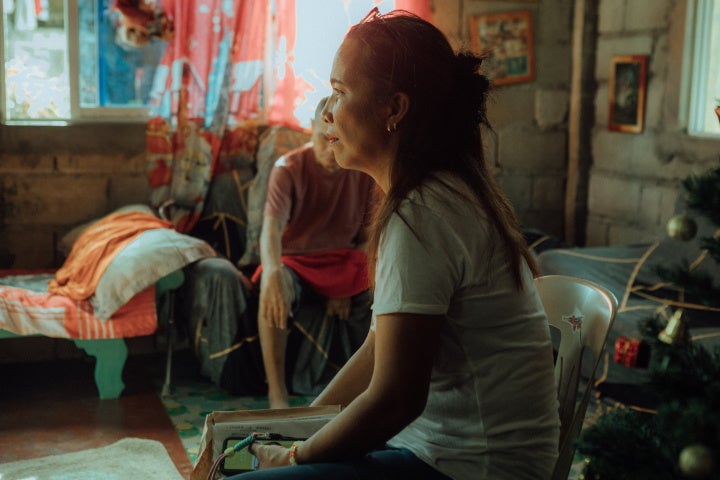
A new web feature looks at climate change, planned relocation, and people with disabilities in Siargao, Philippines.
The 72-page report, “Punished for Getting Older: South Korea’s Age-based Policies and Older Workers’ Rights,” documents how three age-based employment laws and policies – the mandatory retirement age of 60 or older, the “peak wage” system, and re-employment policies – harm older workers, and how inadequate social security programs exacerbate their situation.

The 40-page report, “‘It Felt Like Everything in Life Stopped’: Legal Capacity Rights Violations Against People with Disabilities in Canada’s Immigration Detention System,” documents how the country’s use of designated representatives undermines the rights of immigration detainees with disabilities to make their own decisions, often with life-altering or even life-endangering consequences. Designated representatives are appointed by the Immigration and Refugee Board when it deems that a detained person is “unable to appreciate the nature of the proceedings.”
The 83-page report, “‘They Destroyed What Was Inside Us’: Children with Disabilities Amid Israel’s Attacks on Gaza,” documents that children who have acquired a disability and children who already had a disability in Gaza face a precarious security situation and additional difficulties as they struggle to comply with frequent Israeli army evacuation orders and a lack of effective advance warning of attacks. The ongoing siege of Gaza, the unlawful obstruction of humanitarian aid, the use of starvation as a weapon of war, and damage and destruction of hospitals cause disproportionate harm to children with disabilities, who struggle to access desperately needed medical treatment and supplies, assistive devices, food, and water. They are at particular risk of lasting psychological harm.

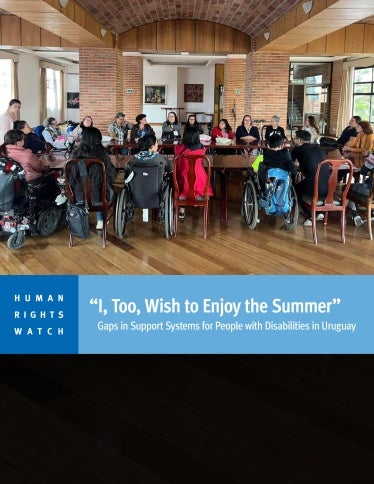
The 50-page report, “I, Too, Wish to Enjoy the Summer”: Gaps in Support Systems for People with Disabilities in Uruguay, documents Uruguay’s shortcomings in meeting the support requirements under its National Integrated Care System for everyone with a disability. Many are ineligible for the care system’s Personal Assistants Program due to their age, income, or how “severe” their disability is. People with certain types of disabilities, like intellectual and sensory disabilities, and those with high-support requirements, are effectively excluded from the program because personal assistants are not trained to support them. Human Rights Watch found that Uruguay has not sufficiently involved organizations of people with disabilities in the design, administration, and monitoring of personal assistance under the care system, resulting in its failure to recognize users as rights-holders and its delivery of inadequate, limited services.
The 63-page report, “‘Abused by Relatives, Ignored by the State’: Domestic Violence against and Neglect of Women and Girls with Disabilities in Kyrgyzstan,” documents how violence by family members or partners often goes unreported and unaddressed due to widespread discrimination against people with disabilities in Kyrgyzstan, especially women and girls. Families often perceive their existence as shameful and hide them from society. Law enforcement and judicial bodies often ignore or downplay reported cases, and a shortage of shelters and other services for survivors of domestic violence who have disabilities makes it harder for them to escape abuse.

To demonstrate an effective, alternative approach, Human Rights Watch partnered with Gerstein Crisis Centre, a community-based mental health crisis response center in Toronto that provides services that are consent-based, nonmedical, trauma-informed, and focused on harm reduction. The 33-page case study, Mental Health Crisis Support Rooted in Community and Human Rights, presents a viable, replicable framework for a holistic approach to mental health crisis response that supports the autonomy of the individual in crisis.

The 68-page report, “‘This Government is Failing Me Too’: South Africa Compounds Legacy of Apartheid for Older People,” details the government’s failure to effectively carry out the Older Persons Act, a post-apartheid law that guarantees the rights of older people and provides for community- and home-based care and support services. These services would enable older people to continue to live in their own homes with the support they are entitled to.
The 71-page report, “‘It Was Really Hard to Protect Myself’: Impact of the Armed Conflict in Syria on Children with Disabilities,” details the abuses faced by children with disabilities, including a heightened risk during attacks and a lack of access to the basic support services they need. The absence of inclusive and universal programs – including in education, delivery of humanitarian aid, and mental health and psychosocial support services – compounds the difficulties children with disabilities in Syria already experience.
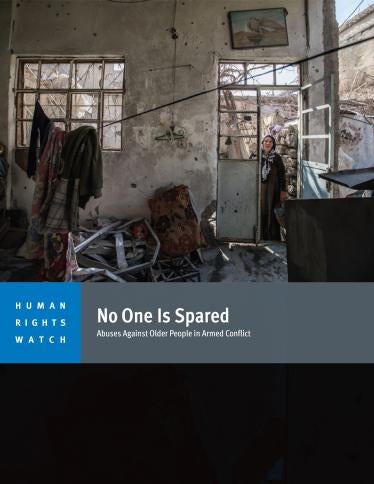
The 49-page report, “No One Is Spared: Abuses against Older People in Armed Conflict,” describes patterns of abuses documented by Human Rights Watch between 2013 and 2021 against older people affected by armed conflicts in Burkina Faso, Central African Republic, Ethiopia, Israel and the Occupied Palestinian Territory, Mali, Mozambique, Nagorno-Karabakh, Niger, South Sudan, Syria, and Ukraine. The report also draws on the serious protracted violence in two English-speaking regions of Cameroon, Myanmar security force atrocities against older ethnic Rohingya in Rakhine State, and the experiences of older refugees in Lebanon displaced by conflict in Syria.
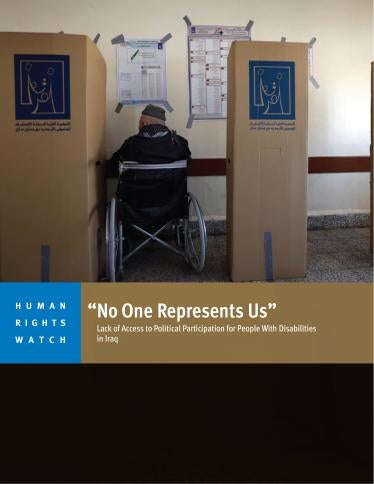
The 36-page report, “‘No One Represents Us’: Lack of Access to Political Participation for People with Disabilities in Iraq,” documents that Iraqi authorities have failed to secure electoral rights for Iraqis with disabilities. People with disabilities are often effectively denied their right to vote due to discriminatory legislation and inaccessible polling places and significant legislative and political obstacles to running for office.
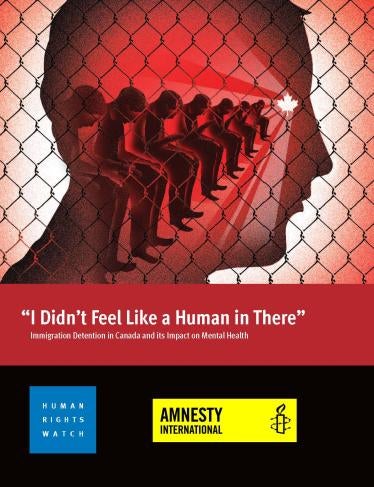
The 100-page report, “‘I Didn’t Feel Like a Human in There’: Immigration Detention in Canada and Its Impact on Mental Health,” documents how people in immigration detention, including those fleeing persecution and seeking protection in Canada, are regularly handcuffed, shackled, and held with little to no contact with the outside world. With no set release date, they can be held for months or years. Many are held in provincial jails with the regular jail population and are often subjected to solitary confinement. Those with psychosocial disabilities – or mental health conditions – experience discrimination throughout the process.
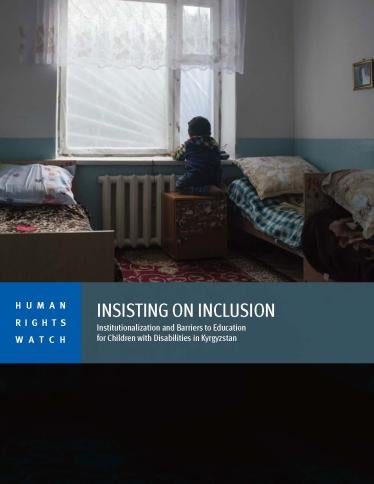
The 74-page report, “Insisting on Inclusion: Institutionalization and Barriers to Education for Children with Disabilities in Kyrgyzstan,” documents how children are frequently denied quality, inclusive education, in which children with and without disabilities study together in mainstream schools. Children with disabilities are subject to discriminatory government evaluations that often lead to segregation in special schools or at home, Human Rights Watch found. Kyrgyzstan ratified the United Nations Convention on the Rights of Persons with Disabilities (CRPD) in 2019.
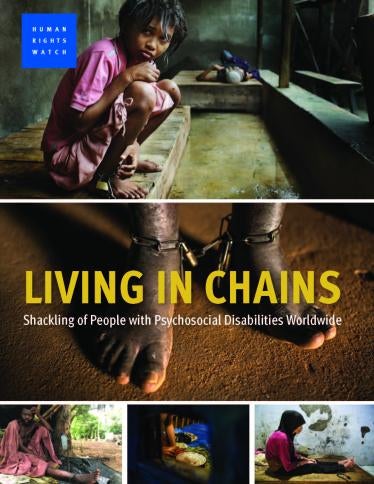
The 72-page report, “Living in Chains: Shackling of People with Psychosocial Disabilities Worldwide,” examines how people with mental health conditions are often shackled by families in their own homes or in overcrowded and unsanitary institutions, against their will, due to widespread stigma and a lack of mental health services. Many are forced to eat, sleep, urinate, and defecate in the same tiny area. In state-run or private institutions, as well as traditional or religious healing centers, they are often forced to fast, take medications or herbal concoctions, and face physical and sexual violence. The report includes field research and testimonies from Afghanistan, Burkina Faso, Cambodia, China, Ghana, Indonesia, Kenya, Liberia, Mexico, Mozambique, Nigeria, Sierra Leone, Palestine, the self-declared independent state of Somaliland, South Sudan, and Yemen.
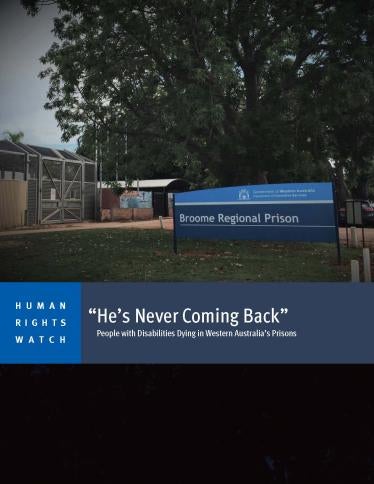
The 42-page report, “‘He’s Never Coming Back’: People with Disabilities Dying in Western Australia’s Prisons” examines the serious risk of self-harm and death for prisoners with mental health conditions, particularly Aboriginal and Torres Strait Islander prisoners, in Western Australia, nearly 30 years after the 1991 Royal Commission into Aboriginal Deaths in Custody. A Human Rights Watch analysis of coroners’ inquest and media reports between 2010 and 2020 found that about 60 percent of adults who died in prisons in Western Australia had a disability, including mental health conditions. Of the 60 percent, 58 percent died as a result of lack of support, suicide, or targets of violence – and half of these deaths were of Aboriginal and Torres Strait Islander prisoners.
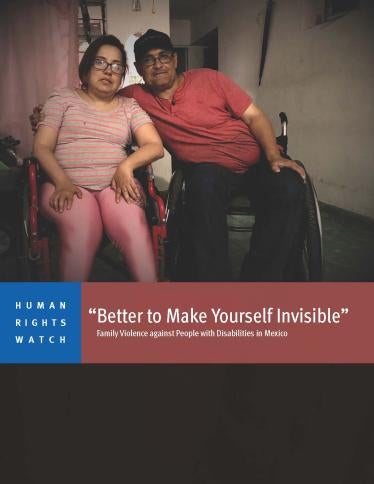
The 71-page report, “‘Better to Make Yourself Invisible’: Family Violence against People with Disabilities in Mexico,” documents the abuse and neglect many people with disabilities face at the hands of their families, with whom they are often trapped due to a lack of government support for independent living. Human Rights Watch also describes the often-insurmountable challenges people with disabilities face in accessing justice and protection from their abusers.