(Mexico City) – Some Latin American and Caribbean governments are violating rights of noncitizens at the Trump administration’s behest, while others are using Trump’s policies and rhetoric as cover for abuses against their own citizens, Human Rights Watch said today in its World Report 2026.
In the 529-page World Report 2026, its 36th edition, Human Rights Watch reviews human rights practices in more than 100 countries. In his introductory essay, Executive Director Philippe Bolopion writes that breaking the authoritarian wave sweeping the world is the challenge of a generation. With the human rights system under unprecedented threat from the Trump administration and other global powers, Bolopion calls on rights-respecting democracies and civil society to build a strategic alliance to defend fundamental freedoms.
The Trump administration’s brazen military assault on Venezuela in early 2026 may consolidate the country’s repressive government so long as it serves US political and business interests. During 2025, several governments limited access to asylum and abused migrants deported from the United States. Some Latin American governments have increasingly pursued security policies based on mass arrests, military deployment to fight “terrorism,” and excessive force. While the US government has often criticized systematic human rights violations in Venezuela, Cuba, and Nicaragua, it has turned a blind eye to grave abuses in El Salvador, Ecuador, and Peru that restrict journalists and human rights groups.
“During its first year in office, the Trump administration has had an unquestionably negative influence over Latin America and the Caribbean,” said Juanita Goebertus, Americas director at Human Rights Watch. “Latin American governments have a responsibility to defend democracy and make sure it delivers for their people, regardless of who sits in the White House.”
- Venezuela, Cuba, and Nicaragua repress virtually all forms of dissent, arresting critics and opponents and forcing many into exile. In Venezuela, authorities released some detainees in early 2026, but many people remain imprisoned for political reasons. Latin American governments should push for the release of all political prisoners in these countries and promote peaceful transitions to democracy, Human Rights Watch said. They should also oppose ongoing US strikes in the Caribbean and Pacific, which have killed over 120 people in what amount to extrajudicial executions under international human rights law.
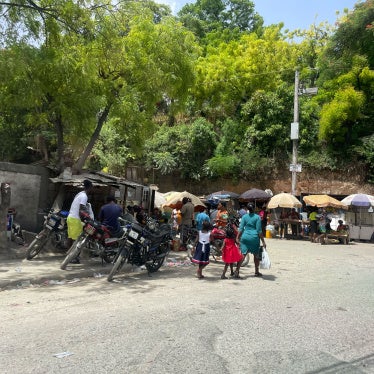
- Organized crime groups pose a threat to human rights, with the most extreme case in Haiti, where criminal groups control 90 percent of Port-au-Prince, have expanded into other parts of the country, and have committed thousands of killings.
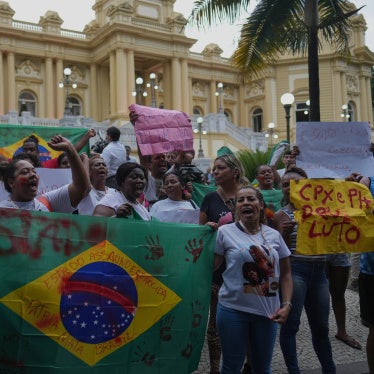
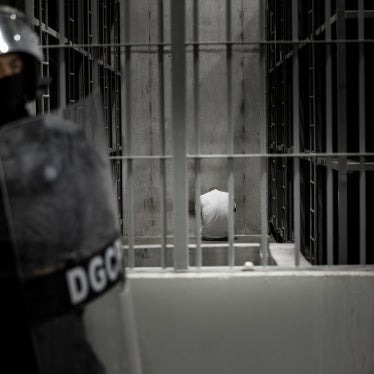
- Governments including those in El Salvador and Ecuador have committed grave human rights violations in responding to organized crime. In Brazil, a police raid in Rio de Janeiro resulted in 122 killings, part of a larger pattern of abusive use of force. In Mexico, the government has combined expanded intelligence gathering with measures that open the door to mass arrests, such as mandatory pretrial detention. Under President Gustavo Petro’s “total peace” strategy in Colombia, armed groups and organized crime have expanded their control. Governments including Honduras, Peru, El Salvador, and Ecuador have unjustifiably suspended rights for long periods in their fight against crime.
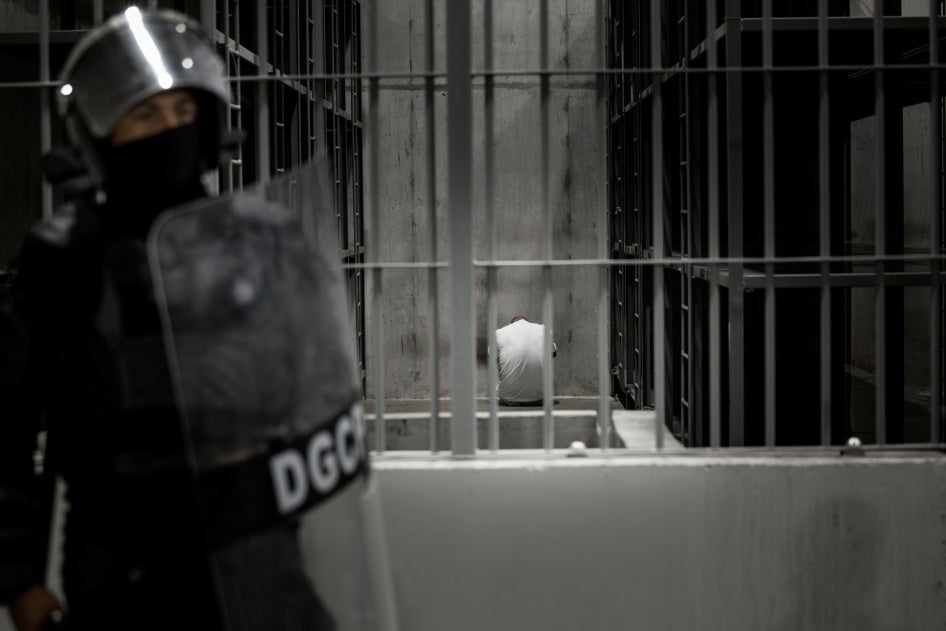
- Panama and Costa Rica have arbitrarily detained third country nationals deported from the United States. El Salvador subjected Venezuelans the Trump administration moved there to enforced disappearances, arbitrary detention, and systematic torture. The Dominican Republic has escalated deporting Haitians, returning them to danger, in violation of international human rights law.
- As the United States gutted foreign aid for human rights groups and independent media, El Salvador, Peru, and Ecuador passed laws that allow arbitrary shutdowns of human rights groups and media outlets. Argentina has created an increasingly hostile environment for independent media. Guatemala’s attorney general arbitrarily arrested government officials, human rights defenders, and critics. El Salvador detained prominent human rights critics, including the anti-corruption lawyer Ruth Lopez.
“Human rights groups and independent journalists remain a key bastion to protect democracy in the Americas,” Goebertus said. “Governments should have their backs as they work at grave risk to promote human rights and expose corruption and abuse.”