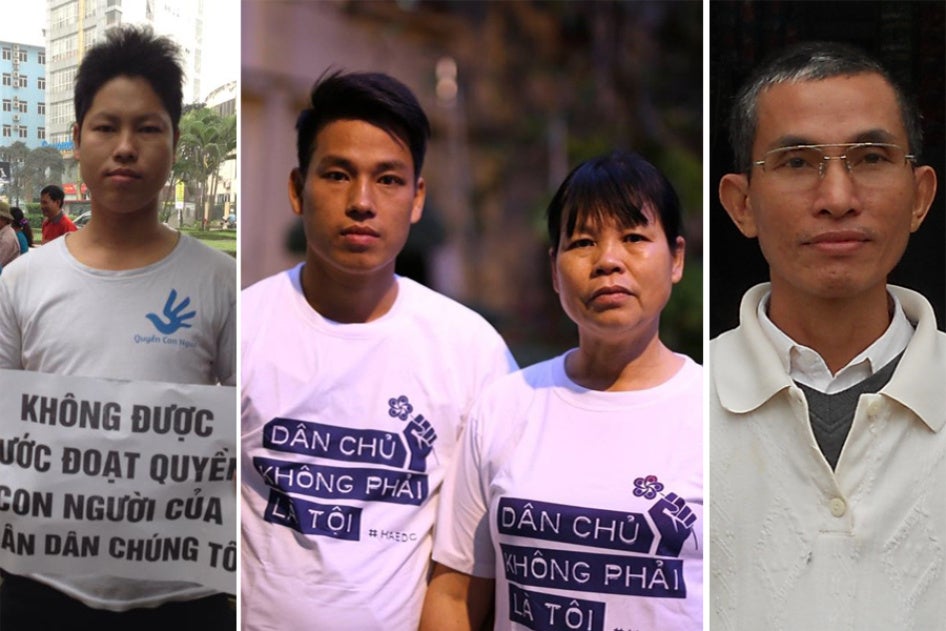
(Bangkok) – Vietnam’s authorities cracked down harshly on dissidents and perceived critics of the government as Communist Party leadership consolidated its power in 2025, Human Rights Watch said today in its World Report 2026.
The authorities targeted for arrest and prosecution those raising issues on social media such as religious freedom, land rights, Indigenous rights, and corruption.
“The Vietnam government’s escalating crackdown on fundamental freedoms comes even as the leadership strives for greater international recognition and trade deals,” said Patricia Gossman, senior associate Asia director at Human Rights Watch. “International donors and trade partners should publicly and privately press the Vietnamese government to reform its abusive laws and immediately release all those held for exercising their basic rights.”
In the 529-page World Report 2026, its 36th edition, Human Rights Watch reviewed human rights practices in more than 100 countries. In his introductory essay, Executive Director Philippe Bolopion writes that breaking the authoritarian wave sweeping the world is the challenge of a generation. With the human rights system under unprecedented threat from the Trump administration and other global powers, Bolopion calls on rights-respecting democracies and civil society to build a strategic alliance to defend fundamental freedoms.
- Through 2025, Vietnam held more than 160 political prisoners and detained at least 40 others for criticizing the government.
- The government intensified its use of Criminal Code Article 331 to target people who used social media to publicly raise issues including religious freedom, land rights, rights of Indigenous people, and corruption by the government and the Communist Party. In 2025, courts sentenced at least 32 people to prison under article 331. Vietnam, which does not allow independent unions, failed to ratify the International Labour Organization Convention 87 on Freedom of Association and Protection of the Right to Organize, despite pledging to do so.
- The Vietnamese criminal justice system is neither independent nor impartial. The authorities severely restrict the rights to freedom of association, religion, and movement. Prosecutors and courts often stage mobile public trials to shame defendants, carrying out dozens of these across the country in 2025.
Vietnam, in a noncompetitive vote, was reelected in 2025 for another term on the United Nations Human Rights Council.
The Vietnamese government should immediately end its systemic rights abuses and release all prisoners and detainees held for peacefully exercising their civil and political rights, Human Rights Watch said. International trade partners and donors should press Vietnamese authorities to reform its laws and practices in compliance with international human rights standards.