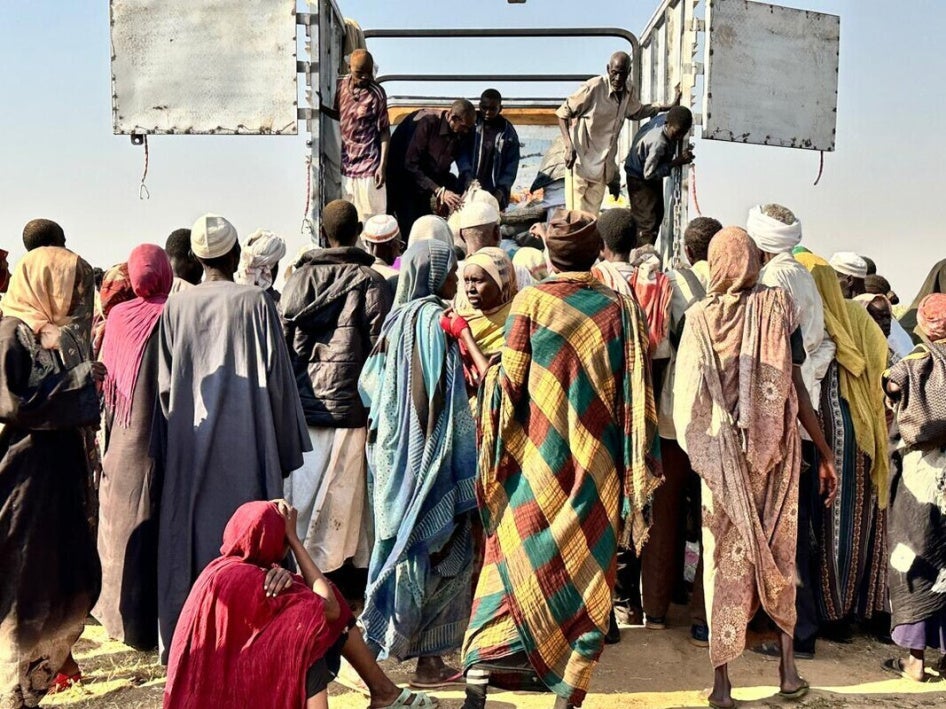
(Nairobi) – Civilians in Sudan, South Sudan, and Ethiopia are bearing the brunt of abusive armed conflicts in which the warring parties frequently and often deliberately target them, Human Rights Watch said today in its World Report 2026. Governments across the region have clamped down on already restricted civic and political space around protests and ahead of elections.
“Brutal attacks against civilians by unaccountable military forces and armed groups are becoming normalized in the Horn and East Africa, as global and regional actors are unwilling to act against those responsible and their backers,” said Mausi Segun, executive Africa director at Human Rights Watch. “Regional and international actors should sanction abusive actors and hold them to account and protect independent oversight of human rights in these countries.”
In the 529-page World Report 2026, its 36th edition, Human Rights Watch reviews human rights practices in more than 100 countries. In his introductory essay, Executive Director Philippe Bolopion writes that breaking the authoritarian wave sweeping the world is the challenge of a generation. With the human rights system under unprecedented threat from the Trump administration and other global powers, Bolopion calls on rights-respecting democracies and civil society to build a strategic alliance to defend fundamental freedoms.
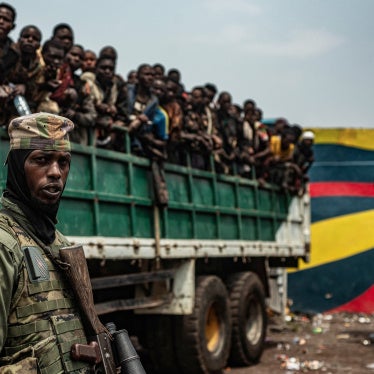
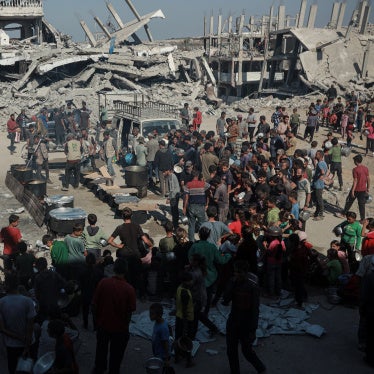
- Widespread laws-of-war violations with rampant impunity are taking place in Sudan. The Rapid Support Forces, battling the military for control of the country, attacked Darfur’s largest displacement camp, besieged North Darfur’s capital, El Fasher, and went on a rampage when it captured the city in October, carrying out widespread killings. Sudanese Armed Forces and their allies, notably when retaking key cities and towns, intentionally targeted civilians and indiscriminately bombed civilian infrastructure.
- Conflict renewed in parts of South Sudan with a dire impact on civilians. In Upper Nile, government aerial bombardments in populated areas, including with incendiary bombs, which may constitute war crimes, killed and injured hundreds of civilians and caused considerable displacement. Following yet another postponement of South Sudan’s elections, the government heavily restricted fundamental rights and freedoms and arbitrarily detained and charged opposition party leaders with serious crimes.
- Government forces and Fano militia in Ethiopia’s Amhara region committed war crimes and other serious abuses, while Eritrean forces in the Tigray region committed abuses against civilians in areas under their control. With elections scheduled for June 2026, the authorities targeted journalists and independent media and sought to legalize its clampdown on rights organizations.
Governments in the region committed widespread repression of civic space notably around protests and elections.
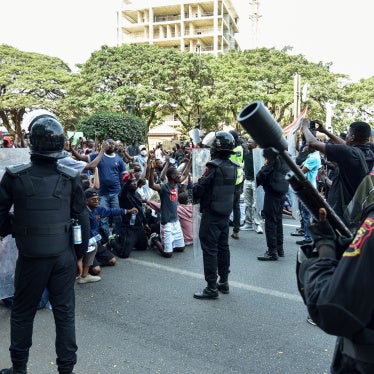
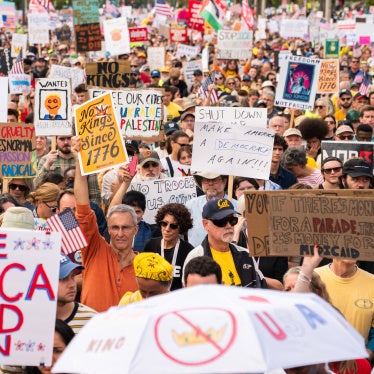
- Kenya’s security forces brutally repressed protests using lethal force and committed other serious abuses against protesters.
- In Tanzania and Uganda, ahead of general elections slated for October 2025 and January 2026 respectively, the authorities jailed key opposition leaders, cracked down on journalists and protesters, and restricted free expression rights.
- Tanzania’s authorities responded with lethal force and other abuses, including nationwide internet restrictions, to election day protests.
- Despite a Supreme Court ruling that they are unconstitutional, Uganda reauthorized trials of civilians before military tribunals, targeting political opponents.
- Despite mandates to prevent and mitigate conflict, the African Union and regional bodies, including the Intergovernmental Authority on Development, took no meaningful action to help protect civilians, prevent abuses, or hold abusers accountable.