(New York) – Pakistani authorities should quash the unjust conviction of Junaid Hafeez, who was sentenced to death in 2013 under Pakistan’s draconian blasphemy laws, Human Rights Watch said today. Hafeez’s 13 years in prison raise grave concerns about the lack of due process and the broader misuse of the country’s blasphemy laws.
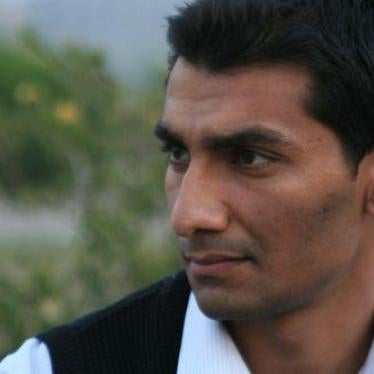
Police in Punjab province arrested Hafeez, then an academic in his twenties, on March 13, 2013, for blasphemy based on comments he allegedly posted on Facebook. In December 2019, a court in Multan sentenced Hafeez to death following a repeatedly delayed trial lasting several years that took place inside a high-security prison amid fears of mob violence. His appeal has yet to be heard and he has been held in solitary confinement since June 2014.

“Junaid Hafeez’s case is emblematic of the unjust and abusive nature of Pakistan’s blasphemy laws,” said Elaine Pearson, Asia director at Human Rights Watch. “The authorities should quash Hafeez’s conviction and safely release him and others held under the blasphemy laws.”
The blasphemy laws, section 295-C, and other provisions of Pakistan’s penal code carry what is effectively a mandatory death sentence. Although there have been no executions, several people are currently on death row, while dozens are serving life sentences for related offenses. Hundreds have been charged under the law in the past three decades.
The long delay in Hafeez’s trial was among the denials of due process that many charged with blasphemy face. Holding him for years insolitary confinement is cruel and inhuman treatment that may amount to torture, Human Rights Watch said. Blasphemy suspects often find it extremely difficult to find legal representation because of threats and violence against legal counsel. In May 2014, unidentified gunmen fatally shot Rashid Rehman, a prominent human rights activist and Hafeez’s defense lawyer, in his office in Multan. Rehman had been threatened with “dire consequences” for defending Hafeez.
Pakistan’s blasphemy laws have long been used to prosecute members of minority religious communities or to carry out personal vendettas, extortion, and blackmail. In recent years, blasphemy laws have been increasingly invoked to jail and prosecute people for comments made on social media.
Discrimination in Pakistan’s criminal justice system against people accused of blasphemy has resulted in miscarriages of justice, Human Rights Watch said. The authorities almost never hold those who commit violence in the name of blasphemy to account, while those accused under blasphemy laws—generally without evidence—suffer long pretrial detention, lack of due process, and unfair trials that may result in years in prison.
The government’s indifference to the abuses under the blasphemy laws and the mob violence it provokes is discriminatory and violates rights to freedom of religion, belief, and expression.
In October 2025, the government announced that it would introduce procedural safeguards to the blasphemy laws. Introducing safeguards and safely releasing all those detained or imprisoned on blasphemy charges would be important steps toward repealing the blasphemy laws, Human Rights Watch said. The authorities should investigate threats and attacks based on blasphemy accusations, with particular concern for members of targeted religious minorities and other marginalized groups.
“In recent months, the government has made progress in addressing some of the injustices of the country’s blasphemy laws,” Pearson said. “Hafeez’s case is an opportunity to demonstrate real intent and seriousness toward reform."